Thursday, June 18, 2020

Culture through English A: Summary writing・要約について

Hello!


How are you? Today I will introduce summary (要約) writing to you. From here if you ever want to do any presentation, you should have a summary for it. 

Now let's look at summary writing!

Summary writing
What is a summary? It is a short statement of purpose (SOP) that shows what your presentation topic is, and what you will show in it. 

Let's look at an example of a summary for our first assignment about our identities. What would a presentation summary for this topic look like? 


First, show a little background to the topic - in this case, about yourself (例えば):

While I am in my second year now at Daito Bunka and am studying British and American literature like all of you, I have other hobbies and interests as well.

Next, show some details (詳細) about your topic - in this case, yourself (例えば):

While I am in my second year now at Daito Bunka and am studying British and American literature like all of you, I have other hobbies and interests as well. I enjoy reading books, especially novels, but also gaming and cooking.

After that, show a little more detail (例えば):

While I am in my second year now at Daito Bunka and am studying British and American literature like all of you, I have other hobbies and interests as well. I enjoy reading books, especially novels, but also gaming and cooking. My father is a great cook and he encouraged me to learn how to cook.

Finally, show in a direct (直接) way what you will present about 
(例えば):

While I am in my second year now at Daito Bunka and am studying British and American literature like all of you, I have other hobbies and interests as well. I enjoy reading books, especially novels, but also gaming and cooking. My father is a great cook and he encouraged me to learn how to cook. In this presentation today, I will tell you more about myself, my hobbies and interests, and what I am like as a person. 


So now this is what your finished summary should look like 
(例えば):

While I am in my second year now at Daito Bunka and am studying British and American literature like all of you, I have other hobbies and interests as well. I enjoy reading books, especially novels, but also gaming and cooking. My father is a great cook and he encouraged me to learn how to cook. In this presentation today, I will tell you more about myself, my hobbies and interests, and what I am like as a person. 

This is only 79 words long. Most summaries should run only around 60-80 words in length, though for more complex topics, they can go up to 100 words. 

I hope this can help you with your summary writing! 


Images: Personal photographs. All rights reserved.

Writing English A ・Links for grammar and other writing tips & hints

Hello! 


How are you? 
Here is a special post for all my writing students about grammar and other writing tips and hints.

I have a lot of blog pages on these kinds of notes. You can access these on the side menu of this blog on your computer. On your Smartphones, you can access these notes at the bottom of the display of this blog.

But - I thought putting these links to those pages on this post would be better. So here are the links from those pages for you about things that can help your writing.

Click on the links you want or need to check out.

1. How to use a, an, the; many, much, & a lot of: Click on this link here. 

2. 
How to use verbs (動詞) with passive forms (受動態) & present perfect tense (現在完了): 
Click on this link here. 

3. How to group sentences & connect words in sentences (書き、作文: 文書布置、接続語): 

Click on this link here. 

4. How to use examples & illustrations (書き、作文: 例え・実例): Click on this link here. 

5. How to write conclusions (書き、作文: まとめ、終わりのこと): Click on this link here. 

I recommend you to check these links out. They come from my blog, and I wrote almost all of the notes myself. Check these out as many times as you want or need. They can really help you in your writing!

Good luck! I hope these links, and the notes in them, will help you with any difficulties you might still have with your writing. 

See you next week! 


Image: "Process Word" (courtesy of Stuart Miles)/FreeDigitalPhotos.net

Tuesday, June 16, 2020

Writing English A: Opinion writing about refugees・難民のオピニオン

Hello!


How are you? Today let's look at refugees (難民) and the places they come from - and where they may go.

Activity

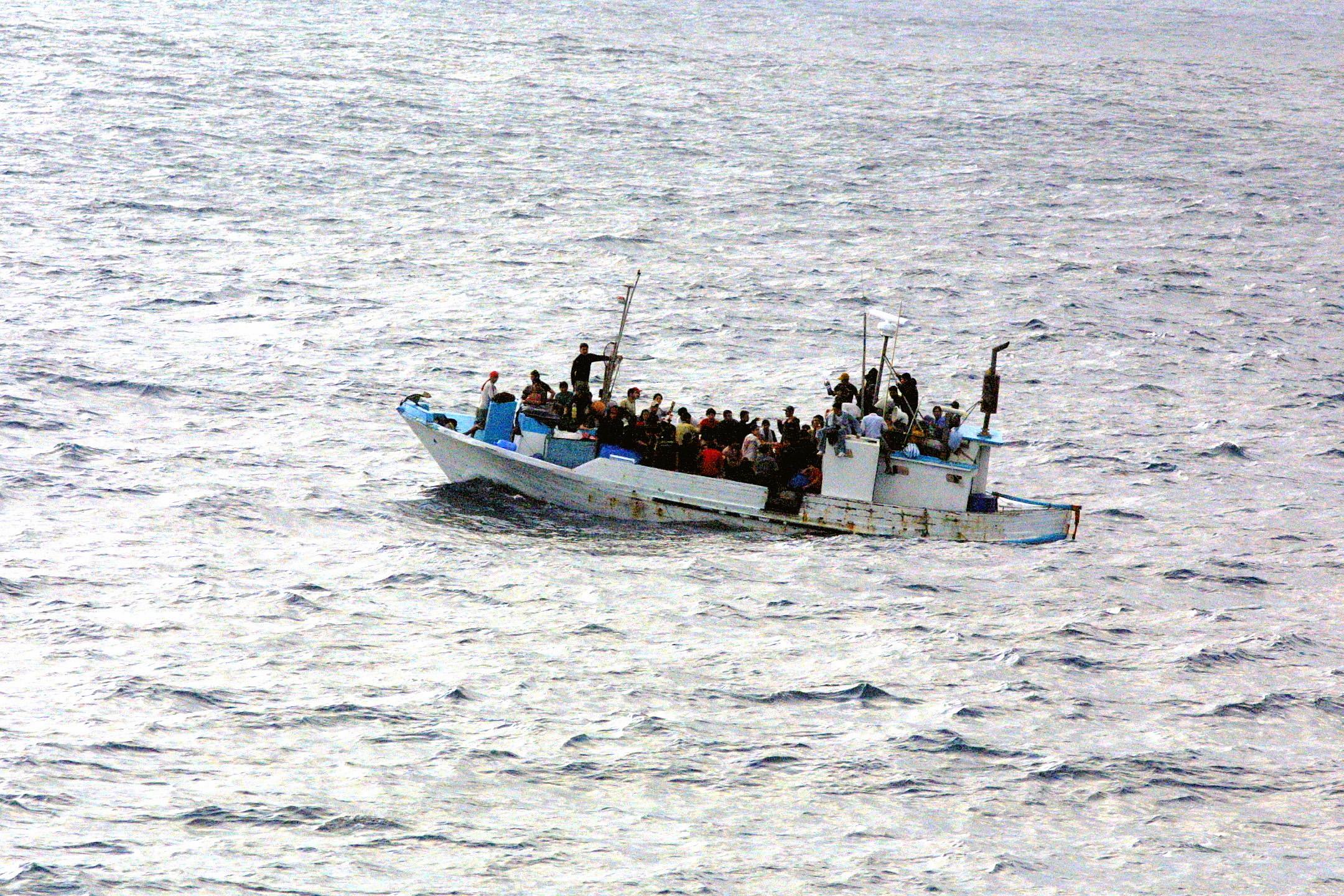
Look at the following four (4) pictures. What are they doing? Where are they going? Where might they be coming from? 

One thing they all have in common is that they can't live in the places they come from any more. What are some reasons why they have to leave where they come from? Moreover, what might be they feeling about leaving?


Most importantly - what's your opinion of their situations? Make some notes in your notebooks about them.


See you next time!

Images: Top - By © MONUSCO/Sylvain Liechti, CC BY-SA 2.0, https://commons.wikimedia.org/w/index.php?curid=32470185/Boy - http://commons.wikimedia.org/wiki/File:Asylbewerber_-_15.jpg#mediaviewer/File:Asylbewerber_-_15.jpg/Man with passport and children - by Alemaugil - Own work, Public Domain, https://commons.wikimedia.org/w/index.php?curid=2956803/Boat - http://commons.wikimedia.org/wiki/File:Refugees_on_a_boat.jpg#mediaviewer/File:Refugees_on_a_boat.jpg/People on grounds - "Evstafiev Travnik refugees" http://commons.wikimedia.org/wiki/File:Evstafiev-travnik-refugees.jpg#mediaviewer/File:Evstafiev-travnik-refugees.jpg
All images from Wikimedia Commons. 

Culture through English A: Family origins・家族の出身

Hello!


How are you? Today, let's look at where we come from. The picture above is of the Chikuzen-no-kuni family register (戸籍謄本).

This is from Fukuoka-ken, and it's the oldest known family register in Japan, at over 1,300 years old!

All of us can trace our origins (先祖) - that is, our family beginnings - to somewhere. So let me share with you my origins. 


So those are my origins. But how about your family? How far back do you know about where it came from in Japan, or maybe another country?


The picture above is a shot of a student's notes. She researched about the origins of her family (家族の出身). Her family came from Kanagawa.

Activity/homework
How about your families? Which parts of Japan - or which parts of other countries - did they come from? 

Let's find out about our families and where they came from! 

See you next time!

Images: Top - screenshot from internet of Chikuzen-no-kuni household register courtesy of Asuka Historical Museum. All rights reserved/Screenshots of Power Point slides - personal images. All rights reserved/Student notebook page - personal photograph. All rights on content reserved to the student. All rights reserved on personal photograph.

Freshman Reading English A: Unique houses・ウニークな家

Hello!


How are you? I found an interesting website some time back and I would like to share some images from it with you! The website is called Matador and it has some unique and interesting photographs. 

One group of pictures it has is of some unique houses in different countries. Today I'd like to show you some of the pictures it has of these unique houses - like the one at the top. It was built for a shoe salesman to look like a shoe! 

Here are some more pictures of these interesting homes:

1.

This one is from Mexico. It was built to look like a seashell because it is near a beach! 

2. 

This one is from the U.S., in Kentucky. It is called the "Mother Goose" house because of its goose head. If you look closely, the head has eyes made of car headlights!

3. 

This small house was built in the country for a person who wanted to get away from people. You have to climb a small tree, plus go up a ladder, just to get into a small door at the bottom of the house. Plus - the ladder can be pulled up into the house so no other people can get in!

4. 

This is a famous place in North America. It is in Montreal, in Canada, and was built for the 1967 World's Fair. It was based on the idea of how people thought we would live in the future - like our time! 

5. 

This house in England was built around a water tower. Later, the water tank in the house was taken apart and the house around it was left. Unique, isn't it? 

Activity
If you could live in one of these houses, which one would you like to live in, and why? Talk about them, then write a little and give your choices - and reasons for them! 

If you want to see more unique houses on the Matador website, click here. 

Take care! See you next time!

Images: Courtesy of Matador. All rights reserved to the copyright holders. Cited and uploaded strictly for classroom use. 

Wednesday, June 10, 2020

Writing English A: Writing assignment 1・作文1

Hello!


How are you? Here is our first writing assignment (作文1) - writing about interesting people or places   (面白い人達、場所、位置). 

Choose one (1) of these - writing about an interesting or unique person, or writing about an interesting or unique place. 

I am gathering writing on this topic into two books – one called The Small Book of Big People, about your most interesting or respected people – and another called Places & Traces, about special places and other things that people remember. The best of your writing on these topics could go into these books, so write to the best you can! 

How much to write
I would like you to write as much as you can, because your work may be published (出版した) on both this blog and in The Small Book of Big People and Places & Traces books. I would like to see maybe 2-3 paragraphs' worth of writing – but if you can write more, go for it! I encourage you to write as much as you can.

Task (choose one)
About people 
Who do you think are some interesting or special people in Japan or the world today?  What are they famous for? You can write about people you know such as your mother or father, brother or sister, or a best friend. 

When you write about a person, include this information:
  • What they look like
  • How they dress (if they have a unique fashion sense or style)
  • What they are known to you for (or what they are famous for)
  • What is unique or interesting about them
About places
What are some interesting or special places you know of? You can write about a place you have been to, or a place you haven’t been to but want to go to. It can be a place in Japan, or a place in another country. It can be a local place, a historical (歴史的) place, or a famous place – or a place that has all of these things. When you write about a place, include this information:
  • Where it is
  • What is special about it (to you)
  • What special things are there (mountains, famous buildings, and so on)
  • How to get there
You can look at the pictures again in the blogposts about describing and characterizing people, and the one about describing places. They can help you with your writing. 

Deadline (締め切り)
There will be two (2) deadlines - June 16th (6/16) for a rough draft (下書き), and June 23rd (6/23) for the final version. 

So, please send me your rough draft for review and individual comments by 6/16, and then, a final version by 6/23. 

Before that time, if you need any advice or guidance, message me anytime.

Good luck! I look forward to reading your great writing about people or places!


Image: screenshot from http://evarazdin.hr/zanimljivosti/muski-kutak/zene-vise-vole-visoke-muskarce-358897/
I do not own the rights to the original upload from the screenshot. Uploaded for educational purposes only. All rights reserved to the copyright holder(s).

Culture through English A: Assignment 1・課題1

Hello!


How are you? Today I will introduce our first short presentations about our identities.

Who are you as a person? What would you say about yourself - for example, your character or your temperament (気質)? What are your hobbies or interests? What do you think people like the most about you?


Task & guidelines
You have a choice for this assignment. You can:
  • Make a video of yourself giving a short, 5-minute PowerPoint, Key Note, or Google Slides presentation about yourself and your identity –or-
  • Write a short, 3-4 paragraph (段落) report about yourself and your identity, on a Word document or handwritten on notebook pages, with clear pictures taken of the pages
Your presentation or report can be titled My Identity or About Me, or some other title like that.

On your presentation or report, have different sections about the following points:
  • your family
  • where you come from
  • what the schools you went to were like
  • your hobbies & interests
  • your character & habits (習性)
If you choose to do a presentation, you can design it any way you want, with pictures and some writing about yourself - but please have the pictures and the writing about the points above!

If you choose to write a report, do the same – please have your report be about the points above!

We will present in small groups to each other for around 4-5 minutes, including a Q&A from the classmates we will present to.

Deadline (締め切り) & notes about uploading 
Please upload your presentation files or written documents to Manaba no later than 23:59 on June 16th (6/16). 

Please name your display file or written document like this (here is an example):

t_suzuki_cte_a_self_identity

 (“cte_a” means Culture through English A)

Please remember again that if you don’t have a computer but want to write a report, you can write clearly by hand on notebook paper, take a clear picture with your smartphone of the notebook page(s), and upload the picture file to Manaba. Please name the file the same way as above for a presentation file or Word document.

Basic presentation tips
Here are some basic presentation tips for all of you who want to do presentations. I made these notes below for this class in 2019. I have uploaded them here for all of you to see. 


Basic report tips
Here are some useful phrases that you can use in your writing. These are not the only kinds of phrases you can use, but these are some examples of how to can begin and move into your writing, and move from one point to another in your ideas. 

Introductions:
I am glad to introduce myself in this report. I’m (your name) and I’m now a second-year student here. (…)
Beginning my second year at Daito Bunka, I’m (your name) and am happy to introduce myself here. (…) 
This year has been a strange one, but I am happy to finally begin the new school year. I’m (your name) and am beginning my second year here at Daito Bunka. (…)

Body (中心) of report*: 
Here is my background. I was born and raised in (your birthplace and where you grew up)(…)

First, about my background. I was born in (your birthplace) but raised in (the place where you grew up). My family left there when I was…years old, and (…)

Let me tell you about where I come from/(my birthplace)/(my background). To begin with (…)

First, I’ll begin with (my background)/(place of birth)/(where I come from)/(upbringing). I was (…)

To move from one point or idea to another in the body:
After graduating from junior high school, we moved to (name of place) and…

I enjoyed playing baseball in elementary school, and I was the ace pitcher for my team. When I got to junior high, however, I started getting into soccer, and…

I didn’t use to like being around people so much. But when I got to high school, I joined the volleyball club, and there, I started making many friends. (…) 

It’s still hard for me to make friends sometimes, but here at university, I’ve made some good friends I can trust. We do a lot of things together, and…

*Please remember that the body is the main part of your report, so it will be the longest part. 

Conclusions (まとめ):
Finally, I think that (my hobby or interest) is important to me because…

The last thing I want to say is that I hope to make this year better than last year. (…)

In the end, the support of my family has helped me in my school life, because…

I hope to enjoy this class, and make new friends through it. (…)

I hope all this will help you. Good luck!

Images: Personal photographs. All rights reserved.