Showing posts with label Culture through English A. Show all posts

Sunday, April 3, 2022

Welcome to the class!

Hello!


How are you? Welcome to my blog, Daito Learning Pages! I do not use this blog so much anymore, but I might sometimes post videos, pictures and other things for you for our classes. You can write comments here too. We can have fun in these classes!

ブログにようこそ!ブログが授業のためにヴィデオ、写真、画像やアップする。どちでも英語とか日本語コメントの書くができる楽しいクラスしましょう!

Now - I will show you a little bit about myself. The picture above is my "hello" to all of you. The picture looks a little strange. It's not me - it's an image from a CD cover! But I like the image and the colors. 

Here is a little introduction about me and the classes. You have to guess a few things first, so let's get started!


So that's all for now! I'll be glad to see all of you next week! 


Images: Top, 8th & 10th images - screenshots of Frank Zappa Hot Rats album cover. All rights reserved to The Zappa Family Trust. No copyright infringement intended. Original image altered and uploaded for educational purposes only/2nd, 4th, 5th, 6th, 7th, & 11th images - screenshots of personal images. All rights reserved/3rd & 9th images courtesy of Shutterstock. All rights reserved.

Sunday, July 26, 2020

Culture through English A: Spring final assignment・前期末課題

Hello!


How are you? Here are the topics, deadline, and guidelines for our spring semester final presentations

Topics
You can choose one (1) of these topics
  • The origins of some family names in Japan 
  • An immigrant community in Japan (such as Koreans or Chinese born in Japan) or immigrant/unique ethnic community in another country 
  • How a foreign person can become a citizen of Japan or how a person can become a citizen of another country you choose and research about (for example, how a foreign immigrant to the U.S. can become a U.S. citizen)
Task & guidelines 
You have a choice for this assignment. Because this is the final assignment, I will ask for a little more than on assignments 1 and 2. You can:
  • Make a video of yourself giving a 5-7 minute Power Point, Key Note, or Google Slides presentation –or-
  • Write a longer 5-7 paragraph (段落) research reporton a Word document or handwritten on notebook pages, with clear pictures taken of the pages 
About family names
For the first theme choice, be sure to show:
  • The ranking of the family name in Japan or another country (for example, how common is the name) and number of people in Japan or another country with this name
  • Any changes in the kanji of the family name, or the spelling of the name in a different language, over time
  • In the case of Japanese family names, any differences in kanji within the same family name (for example, the difference between 渡辺 and 渡邉) and reasons for this difference
  • In the case of a foreign family name, any possible differences in spelling of the name within  the country (or other countries that have the same language - for example, German language family names in Austria or Switzerland)
  • The different parts of Japan or another country that the family name has migrated to and the parts of Japan or another country that the name is most often found in 
For the second theme choice, here is a list of some unique communities and ethnic groups in some different countries. You do not have to choose one of these - you can think of a refugee, ethnic group or community of your own. But you can choose one (1) of these if you like:
  • The Travelers (Ireland)
  • Vietnamese refugee boat people from the Vietnam War
  • Bretons (northwestern France)
  • The Basques and their language (northwestern Spain/southwestern France)
  • The Sorbs and their language (eastern Germany/southwestern Poland)
  • German minorities of Russia, Ukraine, and Kazakhstan
  • Hungarian minority of Romania
  • The Sami people (northern Norway and Finland)
  • Metis people of Quebec (Quebec, Canada)
  • The Haida First Nations (British Columbia, Canada)
  • Hasidic Jews of New York (New York City, U.S)
  • The Lumbees (east central coast of the U.S.)
  • Cajun (Acadian) people of Louisiana (the U.S.)
  • Cham people (Cambodia)
For the third theme choice, make sure to research points such as
  • Possibilities and issues of dual citizenship rights (二重国籍の権利
  • Obligations of military service (徴兵制度
  • Any possibility of double taxation (課税) between the person’s new country and old country 
  • any other interesting or unique points that you may find about citizenship rights and responsibilities 
About presentations
If you make a Power Point show, I would like you to follow these guidelines: 
  • You have to have a title slide - then a summary slide - then after that 5-7 slides with pictures and text on it - then finally a closing slide
  • It has to be colorful and interesting to look at
  • You have to video-record yourself giving the presentation - or if you can - do a narration to your slides where you talk out your presentation
  • As with our other assignments, you are free to design the presentation display any way you want to.
About reports
If you choose to write a report, as we have done on the other assignments, you can also include pictures with it on a Word document - or take some pictures to go with your report. 

Deadline
Please upload your presentation files or written documents/pictures to Manaba no later than 23:59 on August 5th (8/5). However, I can take your files or documents up to 23:59 on August 8th (8/8). 

Please name your display file(s) or written document like this (here is an example): 

t_suzuki_cteA_final_assignment

("cteA" means Culture through English A)

If you have to upload more than one file, add the extra files with the same name, but with a letter after “final_assignment.” For example:

t_suzuki_cteA_final_assignment_a  (this shows that it is an extra file)

Please remember again that if you don’t have a computer but want to write a report, you can write clearly by hand on notebook paper, take a clear picture with your smartphone of the notebook page(s), and upload the picture file to Manaba. Please name the file the same way as above for a presentation file or Word document. 

I cannot take any more files after 23:59 on August 8th (8/8).

Good luck! 

Image: Top - by Angie from Sawara, Chiba-ken, Japan - Flickr, CC BY 2.0, https://commons.wikimedia.org/w/index.php?curid=639426/Screenshot taken from photograph originally uploaded to the Daily Mail website - http://www.dailymail.co.uk/travel/travel_news/article-3437455/Not-passport-equals-travel-documents-come-different colors-countries-choose-them.html. I do not own the rights to the original image. All rights reserved to the copyright holder(s). Uploaded for classroom use only.

Tuesday, July 14, 2020

Culture through English A: Refugees・難民

Hello!


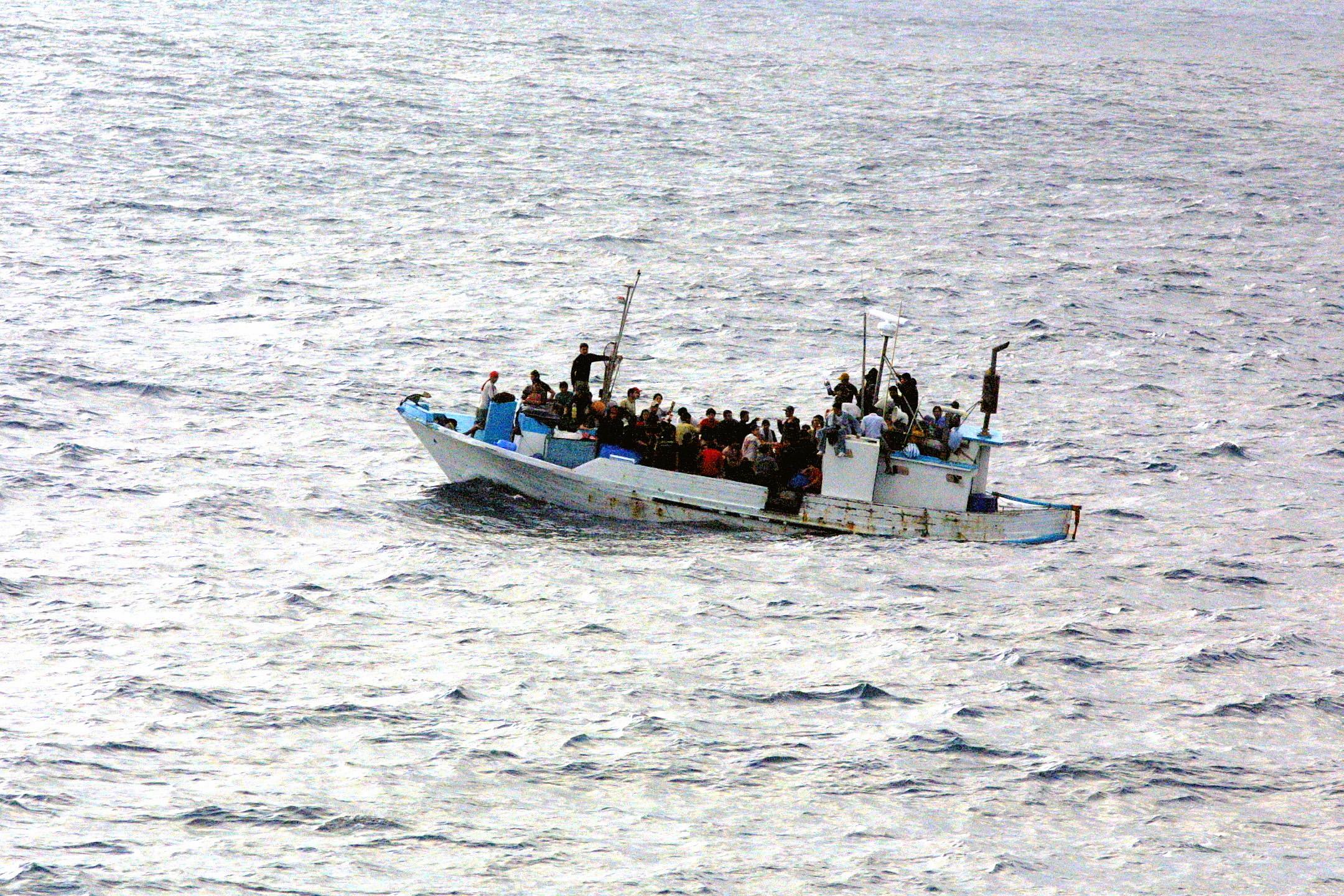
How are you? Today I would like to introduce a new topic about people in difficult situations - such as refugees (難民).

Look at the picture above. Why are so many people on a boat? Where are they going? Talk about this with your classmates. Make some notes about it.

Activity
Now do the same with these two following pictures. Who are the people in the pictures? What are they doing? Where are they going? Where might they be coming from? What are they feeling?

Most importantly - what's your opinion of their situations? Make some notes in your notebooks about them.


See you next time!


Images: Top - http://commons.wikimedia.org/wiki/File:Refugees_on_a_boat.jpg#mediaviewer/File:Refugees_on_a_boat.jpg/Boy - http://commons.wikimedia.org/wiki/File:Asylbewerber_-_15.jpg#mediaviewer/File:Asylbewerber_-_15.jpg/People on grounds - "Evstafiev Travnik refugees" http://commons.wikimedia.org/wiki/File:Evstafiev-travnik-refugees.jpg#mediaviewer/File:Evstafiev-travnik-refugees.jpg/Man with passport and children - by Alemaugil - Own work, Public Domain, https://commons.wikimedia.org/w/index.php?curid=2956803/
All images from Wikimedia Commons. 

Culture through English A: The Ainu・アイヌ

Hello!


How are you? Today let's look at Japan's indigenous people (先住民族) - the Ainu

Look at the picture above. It's a group of Ainu, taken in 1904. Now here's a map of Japan showing the original area, plus the widest locations, of Ainu populations


As you can see, at one time they lived from the northeastern part of the Tohoku, all of Hokkaido, and up through Sakhalin Island (what many older Japanese call Karafuto樺太) and even into all of the Kuril Islands (千島列島). 

But now they only live in Hokkaido. Their numbers are small, and they have married regular Japanese people enough so that they do not look so different. But they are proud of their culture and traditions.

Genetic testing (遺伝子検査) shows that while most Ainu are related to Japanese, they are not closely related to any other modern ethnic group. 

Activity/homework
Since the Ainu have some characteristics that make them at least a little different from most Japanese, here's a little research

What do you think are the origins of the Ainu? Did they come from somewhere else? If so, where did they come from, and how did they get to Japan? 

Here are two maps showing two ideas where the Ainu might have come from (the numbers you see in the maps are not so important – they show some different genetic groups): 


Write out a mini-report about your ideas about where the Ainu came from - most importantly, give some reasons why they came from where you believe they did.

If you believe they came from elsewheredraw a rough map or find another map on the internet - of where you believe they came from

When you are finished, upload your document (or a clear picture of your mini-report on notebook paper) to Manaba. Name your document or picture file like this, with your own name (here is an example): 


t_suzuki_cteA_ainu

I hope you find this interesting.

Images: Top - by Official Photographic Company - Missouri History MuseumURL: http://images.mohistory.org/image/EC2888F4-26C5-258A-DF5F-9E6EBE7F704E/original.jpg Gallery: http://collections.mohistory.org/resource/143534, Public Domain, https://commons.wikimedia.org/w/index.php?curid=61717410/Map - by Arnold Platon - This vector image includes elements that have been taken or adapted from this:  Japan on the globe (claimed) (Japan centered).svg (by TUBS). - Own work (Vectorization), based on this map, CC BY-SA 3.0, https://commons.wikimedia.org/w/index.php?curid=25364093/Upper genetic map - by ABCEditer - Own work by reference to 崎谷満(2009)『DNA・考古・言語の学際研究が示す新・日本列島史 日本人集団・日本語の成立史』勉誠出版, CC BY-SA 4.0, https://commons.wikimedia.org/w/index.php?curid=62921263/Lower genetic map - by Y-dna data file - Own work, CC BY-SA 4.0, https://commons.wikimedia.org/w/index.php?curid=63590897 

Culture through English A: Immigrants・移民

Hello!  


How are you? Today I'd like to introduce a new topic to you about immigrants (移民) - people from one country who move to live in another country.  

Look at these pictures. Can you guess who are Japanese, and who are not Japanese? For the ones who are not Japanese - what are their countries? 
1.

2. 

3.

4.

5.

6.

Special note: Because we have a short semester, and because we are coming close to the end of the semester already, please finish this in one (1) week. Sorry about this!

When you are finished, upload your document (or a clear picture of your handwritten guesses on notebook paper) to Manaba. Name your document or picture file like this, with your own name (here is an example): 

t_suzuki_cteA_my guesses

Have fun playing with your ideas!

Images: Top - By Jean Colemonts/http://commons.wikimedia.org/wiki/File%3AJapanese_Brazilian_Miko_Curitiba_Paran%C3%A1.jpg/1."OFeldman, Tokyo, 2012" by Ofer Feldman- Own work /http://commons.wikimedia.org/wiki/File:OFeldman,_Tokyo,_2012.jpg#mediaviewer/File:OFeldman,_Tokyo,_2012.jpg/ 2. Screenshot of Priyanka Yoshikawa taken from unattributed internet source3. Berzoini125494/ http://commons.wikimedia.org/wiki/File:Berzoini125494.jpg#mediaviewer/File:Berzoini125494.jpg/4Gage Skidmore/ http://upload.wikimedia.org/wikipedia/commons/b/b8/Ryan_Higa_by_Gage_Skidmore.jpg/5. By norio nakayama (Flickr: 大宮アルディージャ vs 清水エスパルス @ NACK5スタジアム)/http://upload.wikimedia.org/wikipedia/commons/5/5f/Dido_Havenaar%2C_assistant_coach_for_Shimizu_S-Pulse.jpg /6. By Cristiano Sant´Anna/http://upload.wikimedia.org/wikipedia/commons/3/3b/Michio_Kaku-cropped.jpg/All images except #2 courtesy of Wikimedia Commons. I do not own the rights to these images. All rights reserved to the copyright holder(s) of image #2. Uploaded for classroom purposes only.

Sunday, July 5, 2020

Culture through English A: Most common names in Spain・スペインの一般的な名字

Hello!


How are you? Let's look today at names in Spanish!

The picture above shows the most common surnames in Spain. You can see that overall, the most common surname is Garcia

Activity/homework
There are some interesting points about naming in Spanish that are different from both English and Japanese. 

Watch this video about Spanish names. Watch it as many times as you want or need, then answer the questions below it in your notebooks.

(If you cannot see the video, go to this link, or go to YouTube and look for "Primer Nombres y Apellidos" at https://youtu.be/HUosdlR6Gy8)


1. What is the first name called in Spanish? 
2. What has had the biggest influence (影響) on names in Spanish in history? 
3. What is another influence on naming that is talked about in the video?     
4. What are last names (surnames) called in Spanish? 
5. How many surnames do Spanish people use? 
     *Which name comes first, and which name comes second? 
     *What is traditionally used to connect the two surnames?  
6. What does the ~ez at the end of some surnames (like Gonzalez, or Martinez), mean? 
7. What does the de mean in surnames?  
8. In the example of Pablo Picasso, which side of the family does “Picasso” come from – his father’s, or mother’s? 

I hope you find this interesting!


Image: By anonymous (No machine-readable author provided.) Alfanje~commonswiki assumed (based on copyright claims). - No machine-readable source provided. Own work assumed (based on copyright claims)., Public Domain, https://commons.wikimedia.org/w/index.php?curid=1430242
Video uploaded from YouTube. I do not own the rights to the content. All rights reserved to the copyright holder(s). Uploaded for classroom purposes only. 

Culture through English A: Most common names in Vietnam・ベトナムの一般的な名字

Hello!


How are you? Today, let's look at Vietnamese names!


You might notice an important point - that Vietnamese surnames (名字match to kanji


Before the French came and colonized (植民した) Vietnam in the early 19th century, the Vietnamese language was written in Chinese hanzi - the Japanese version of which is kanji. Since then, however, the Vietnamese language is written in a version of romaji

In Vietnam, the most common surname is Nguyễn (阮「グエン」).  


Activity/homework

Watch this video about Vietnamese names. Watch it as many times as you want or need, and answer the questions below it in your notebooks. 

(If you cannot see the video here, go to this link, or go to YouTube and look for "Vietnamese Culture #2: Vietnamese Names" at https://youtu.be/dPeSxwvjiTc)


1. How many names do most Vietnamese people have?  
2. Where does the surname (family name) come in the naming order?
3. What percentage of the Vietnamese population uses Nguyễn as a family name?
4. What do women do with their own family names when they get married? 
    * What is one purpose of a woman’s family name when she gets married? 
5. What is the main purpose of a middle name in Vietnamese? 
    * What is another purpose of a middle name? 
6. Who usually decides the given names in Vietnamese culture? 
7. Where do given names come from in Vietnamese? 
8. What kinds of meanings do given names have in Vietnamese? 

I hope you find this interesting!


Image: By Hintha - Lê Trung Hoa (2005) Họ và tên người Việt Nam, Hà Nội, Việt Nam: NXB Khoa học Xã hội (Social Sciences Publishing House), CC BY-SA 3.0, https://commons.wikimedia.org/w/index.php?curid=21862789
Video uploaded from YouTube. I do not own the rights to the content. All rights reserved to the copyright holder(s). Uploaded for classroom use only. 

Wednesday, July 1, 2020

Culture through English A: Assignment 2・課題 2

Hello!


How are you? Today, I will introduce our 2nd assignment. Our topic will be about our family origins (素性and migration (移動patterns. 

Where did your parents - your mother and father - come from? How about your family history before your parents? Which parts of Japan did your grandparents, or their parents, come from? 

If you are from another country, which part, or parts, of the country did your family come from? If you have part of your origins in Japan and part in another country, which country was it and which side of your family - your mother's or father's - is the connection with the country on? 

Task & guidelines 
You have a choice for this assignment. You can:
  • Make a video of yourself giving a short, 5-minute Power Point, Key Note, or Google Slides presentation about the topic –or-
  • Write a short, 3-4 paragraph (段落) report about the topicon a Word document or handwritten on notebook pages, with clear pictures taken of the pages
To make this a little more interesting, imagine that you are going to tell a story, in pictures or a report, about your family's history and migration from one part of Japan (or elsewhere) to another - let's call it My Family's History as a Journey. 

Making this as a story might help you remember how to speak on details and make your speaking smoother and easier for you to remember and for others listening to your talk to follow. 

Now look at the picture above. I have shown this picture before, but here's a reminder. It's a small rough poster from a student who researched her family's migration history - the places where her parents came from and how they met. 

This is a good example of what you can do. I would like you to do some more research - which could include asking your parents and/or grandparents a little more - on your family's origins

On your presentation or report, have different sections about the following points:
  • Where your grandparents (or great-grandparents, if you can find out) came from and where they met
  • What the family names of the grandmothers (or great-grandmothers, if you can find out) were
  • Where your parents met and when they got married
  • When your parents moved to where they now live
About presentations:
If you make a Power Point show, I would like you to follow these guidelines: 
  • You have to have a title slide - then 5-7 slides with pictures and text on it - then a closing slide
  • It has to be colorful and interesting to look at
  • You have to video-record yourself giving the presentation - or if you can - do a narration to your slides where you talk out your presentation
If you choose to do a presentation, you can design it anyway you want. Have some maps - you can hand draw them or download from the internet and note them yourself on computer - and some pictures of the places where your family and some relatives (親族) came from and where they went. 

If you hand draw things, simple pictures are okay - but make your pictures colorful and interesting to look at. Please have the pictures and the writing be about the points above!

About reports:
If you choose to write a report, you can also include pictures with it on a Word document - or take some pictures to go with your report. Please also have your report be about the points above!

Deadline (締め切り
Please upload your presentation files or written documents/pictures to Manaba no later than 23:59 on July 8th (7/8).

Please name your display file(s) or written document like this (here is an example): 


t_suzuki_cteA_assignment_2

("cteA" means Culture through English A)


Please remember again that if you don’t have a computer but want to write a report, you can write clearly by hand on notebook paper, take a clear picture with your smartphone of the notebook page(s), and upload the picture file to Manaba. Please name the file the same way as above for a presentation file or Word document.

Good luck with this! I look forward to our presentation day!

Image: Personal photograph of student poster. All rights reserved on content to the student.