Showing posts with label 移民・難民. Show all posts

Sunday, July 26, 2020

Culture through English A: Spring final assignment・前期末課題

Hello!


How are you? Here are the topics, deadline, and guidelines for our spring semester final presentations

Topics
You can choose one (1) of these topics
  • The origins of some family names in Japan 
  • An immigrant community in Japan (such as Koreans or Chinese born in Japan) or immigrant/unique ethnic community in another country 
  • How a foreign person can become a citizen of Japan or how a person can become a citizen of another country you choose and research about (for example, how a foreign immigrant to the U.S. can become a U.S. citizen)
Task & guidelines 
You have a choice for this assignment. Because this is the final assignment, I will ask for a little more than on assignments 1 and 2. You can:
  • Make a video of yourself giving a 5-7 minute Power Point, Key Note, or Google Slides presentation –or-
  • Write a longer 5-7 paragraph (段落) research reporton a Word document or handwritten on notebook pages, with clear pictures taken of the pages 
About family names
For the first theme choice, be sure to show:
  • The ranking of the family name in Japan or another country (for example, how common is the name) and number of people in Japan or another country with this name
  • Any changes in the kanji of the family name, or the spelling of the name in a different language, over time
  • In the case of Japanese family names, any differences in kanji within the same family name (for example, the difference between 渡辺 and 渡邉) and reasons for this difference
  • In the case of a foreign family name, any possible differences in spelling of the name within  the country (or other countries that have the same language - for example, German language family names in Austria or Switzerland)
  • The different parts of Japan or another country that the family name has migrated to and the parts of Japan or another country that the name is most often found in 
For the second theme choice, here is a list of some unique communities and ethnic groups in some different countries. You do not have to choose one of these - you can think of a refugee, ethnic group or community of your own. But you can choose one (1) of these if you like:
  • The Travelers (Ireland)
  • Vietnamese refugee boat people from the Vietnam War
  • Bretons (northwestern France)
  • The Basques and their language (northwestern Spain/southwestern France)
  • The Sorbs and their language (eastern Germany/southwestern Poland)
  • German minorities of Russia, Ukraine, and Kazakhstan
  • Hungarian minority of Romania
  • The Sami people (northern Norway and Finland)
  • Metis people of Quebec (Quebec, Canada)
  • The Haida First Nations (British Columbia, Canada)
  • Hasidic Jews of New York (New York City, U.S)
  • The Lumbees (east central coast of the U.S.)
  • Cajun (Acadian) people of Louisiana (the U.S.)
  • Cham people (Cambodia)
For the third theme choice, make sure to research points such as
  • Possibilities and issues of dual citizenship rights (二重国籍の権利
  • Obligations of military service (徴兵制度
  • Any possibility of double taxation (課税) between the person’s new country and old country 
  • any other interesting or unique points that you may find about citizenship rights and responsibilities 
About presentations
If you make a Power Point show, I would like you to follow these guidelines: 
  • You have to have a title slide - then a summary slide - then after that 5-7 slides with pictures and text on it - then finally a closing slide
  • It has to be colorful and interesting to look at
  • You have to video-record yourself giving the presentation - or if you can - do a narration to your slides where you talk out your presentation
  • As with our other assignments, you are free to design the presentation display any way you want to.
About reports
If you choose to write a report, as we have done on the other assignments, you can also include pictures with it on a Word document - or take some pictures to go with your report. 

Deadline
Please upload your presentation files or written documents/pictures to Manaba no later than 23:59 on August 5th (8/5). However, I can take your files or documents up to 23:59 on August 8th (8/8). 

Please name your display file(s) or written document like this (here is an example): 

t_suzuki_cteA_final_assignment

("cteA" means Culture through English A)

If you have to upload more than one file, add the extra files with the same name, but with a letter after “final_assignment.” For example:

t_suzuki_cteA_final_assignment_a  (this shows that it is an extra file)

Please remember again that if you don’t have a computer but want to write a report, you can write clearly by hand on notebook paper, take a clear picture with your smartphone of the notebook page(s), and upload the picture file to Manaba. Please name the file the same way as above for a presentation file or Word document. 

I cannot take any more files after 23:59 on August 8th (8/8).

Good luck! 

Image: Top - by Angie from Sawara, Chiba-ken, Japan - Flickr, CC BY 2.0, https://commons.wikimedia.org/w/index.php?curid=639426/Screenshot taken from photograph originally uploaded to the Daily Mail website - http://www.dailymail.co.uk/travel/travel_news/article-3437455/Not-passport-equals-travel-documents-come-different colors-countries-choose-them.html. I do not own the rights to the original image. All rights reserved to the copyright holder(s). Uploaded for classroom use only.

Tuesday, July 14, 2020

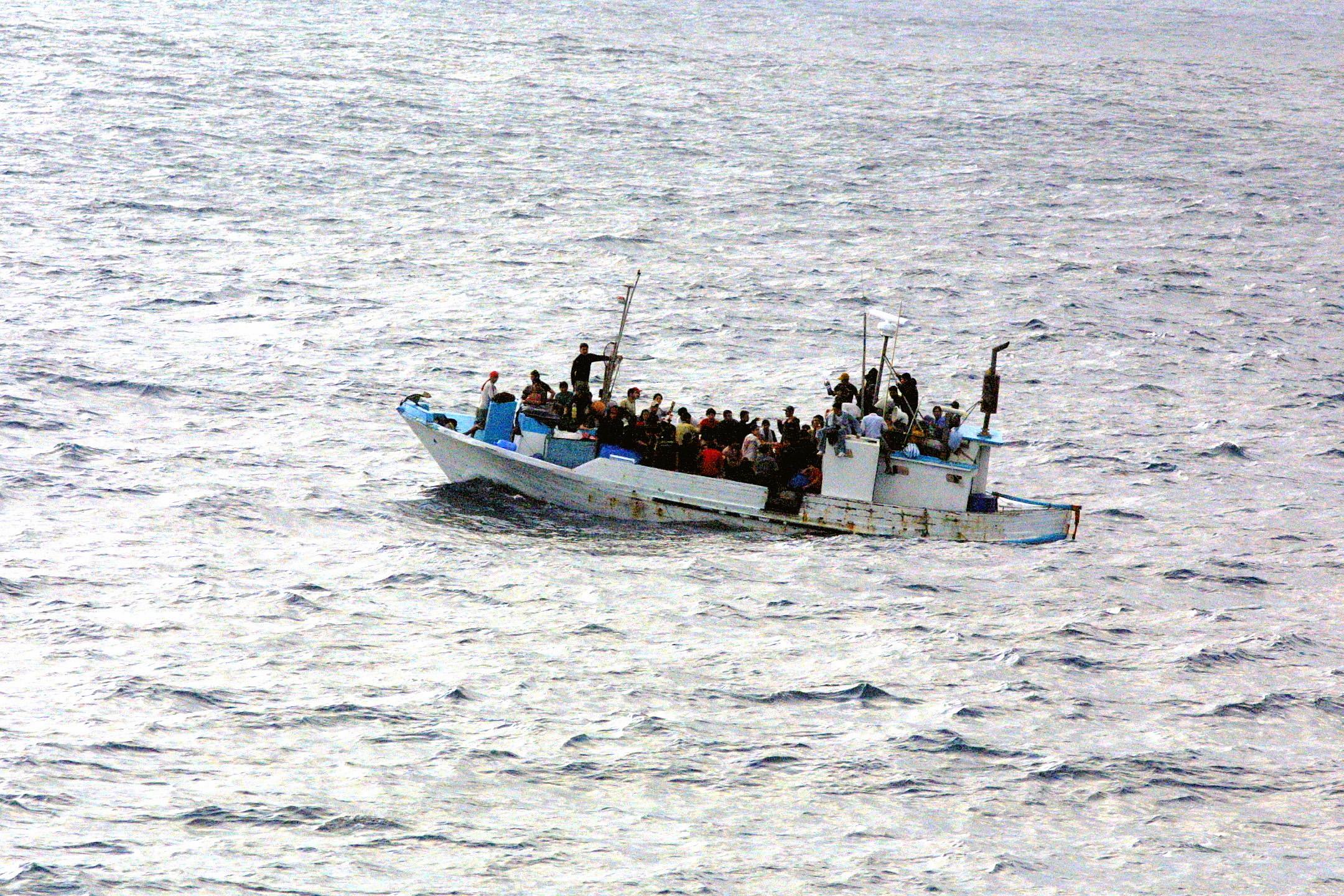
Culture through English A: Refugees・難民

Hello!


How are you? Today I would like to introduce a new topic about people in difficult situations - such as refugees (難民).

Look at the picture above. Why are so many people on a boat? Where are they going? Talk about this with your classmates. Make some notes about it.

Activity
Now do the same with these two following pictures. Who are the people in the pictures? What are they doing? Where are they going? Where might they be coming from? What are they feeling?

Most importantly - what's your opinion of their situations? Make some notes in your notebooks about them.


See you next time!


Images: Top - http://commons.wikimedia.org/wiki/File:Refugees_on_a_boat.jpg#mediaviewer/File:Refugees_on_a_boat.jpg/Boy - http://commons.wikimedia.org/wiki/File:Asylbewerber_-_15.jpg#mediaviewer/File:Asylbewerber_-_15.jpg/People on grounds - "Evstafiev Travnik refugees" http://commons.wikimedia.org/wiki/File:Evstafiev-travnik-refugees.jpg#mediaviewer/File:Evstafiev-travnik-refugees.jpg/Man with passport and children - by Alemaugil - Own work, Public Domain, https://commons.wikimedia.org/w/index.php?curid=2956803/
All images from Wikimedia Commons. 

Culture through English A: Immigrants・移民

Hello!  


How are you? Today I'd like to introduce a new topic to you about immigrants (移民) - people from one country who move to live in another country.  

Look at these pictures. Can you guess who are Japanese, and who are not Japanese? For the ones who are not Japanese - what are their countries? 
1.

2. 

3.

4.

5.

6.

Special note: Because we have a short semester, and because we are coming close to the end of the semester already, please finish this in one (1) week. Sorry about this!

When you are finished, upload your document (or a clear picture of your handwritten guesses on notebook paper) to Manaba. Name your document or picture file like this, with your own name (here is an example): 

t_suzuki_cteA_my guesses

Have fun playing with your ideas!

Images: Top - By Jean Colemonts/http://commons.wikimedia.org/wiki/File%3AJapanese_Brazilian_Miko_Curitiba_Paran%C3%A1.jpg/1."OFeldman, Tokyo, 2012" by Ofer Feldman- Own work /http://commons.wikimedia.org/wiki/File:OFeldman,_Tokyo,_2012.jpg#mediaviewer/File:OFeldman,_Tokyo,_2012.jpg/ 2. Screenshot of Priyanka Yoshikawa taken from unattributed internet source3. Berzoini125494/ http://commons.wikimedia.org/wiki/File:Berzoini125494.jpg#mediaviewer/File:Berzoini125494.jpg/4Gage Skidmore/ http://upload.wikimedia.org/wikipedia/commons/b/b8/Ryan_Higa_by_Gage_Skidmore.jpg/5. By norio nakayama (Flickr: 大宮アルディージャ vs 清水エスパルス @ NACK5スタジアム)/http://upload.wikimedia.org/wikipedia/commons/5/5f/Dido_Havenaar%2C_assistant_coach_for_Shimizu_S-Pulse.jpg /6. By Cristiano Sant´Anna/http://upload.wikimedia.org/wikipedia/commons/3/3b/Michio_Kaku-cropped.jpg/All images except #2 courtesy of Wikimedia Commons. I do not own the rights to these images. All rights reserved to the copyright holder(s) of image #2. Uploaded for classroom purposes only.

Monday, June 29, 2020

Writing English A: Writing assignment 2・作文 2

Hello! 


How are you? Here is our second writing assignment (作文2) – writing opinions on news and issues (時事問題) topics.

Theme & topics
You have a lot of freedom with topic choices for this writing assignment. Choose any news item, or an issue in society – in Japan or another country – that you have an opinion about.  

But if you have trouble thinking of a topichere are some choices for youLook at these and choose one (1):
  • The aging population (老齢人口) of Japan and what older people need for their support
  • Social media and its problems (for example, fake news, or selling of people’s personal data by Facebook or other social media sites)
  • Issues and/or things that need improvement for student life at Daito Bunka
  • Voting rights (投票権for 18-year-olds in Japanese elections (選挙)
For an extra challengehere are two topics that are even deeper, but also even more timely and important. I will give extra points to students who try for writing about these topicsYou have already seen a separate supporting blogpost for one of these topics
  • Refugee issues (難民の問題) and what refugees need for immigration (移住) to Japan
  • The responses of the Japanese government to the COVID-19 virus
I am gathering writing on these topics into a book called Voices & Ideas - this is a book about student opinion writing on news topics and social issues. The best of your writing on this topic could go into this book, so write to the best you can! 

How much to write
I would like to see at least 3-4 paragraphs' worth of writing - however, I would really like you to write as much as you can, because your work may be published (出版した) on both this blog and in the Voices & Ideas book. 

Deadline (締め切り)
There will be two (2) deadlines – July 7th (7/7) for rough draft (下書き), and July 14th (7/14) for the final version

So, please send me your rough draft for review and individual comments by 
7/7, and then, a final version by 7/14

Before that time, if you need any advice or guidance, message me anytime.

Good luck! I look forward to reading your great writing on news and issues topics!


Image: Screenshot taken from https://www.japantimes.co.jp/news/2018/01/20/national/media-national/japanese-read-news-online-newspapers-first-time-survey-finds/#.XIdp9xhh3q1
I do not own the rights to the original photograph. All rights reserved on original photograph to the copyright holder(s). Uploaded for classroom purposes only.

Tuesday, June 16, 2020

Writing English A: Opinion writing about refugees・難民のオピニオン

Hello!


How are you? Today let's look at refugees (難民) and the places they come from - and where they may go.

Activity

Look at the following four (4) pictures. What are they doing? Where are they going? Where might they be coming from? 

One thing they all have in common is that they can't live in the places they come from any more. What are some reasons why they have to leave where they come from? Moreover, what might be they feeling about leaving?


Most importantly - what's your opinion of their situations? Make some notes in your notebooks about them.


See you next time!

Images: Top - By © MONUSCO/Sylvain Liechti, CC BY-SA 2.0, https://commons.wikimedia.org/w/index.php?curid=32470185/Boy - http://commons.wikimedia.org/wiki/File:Asylbewerber_-_15.jpg#mediaviewer/File:Asylbewerber_-_15.jpg/Man with passport and children - by Alemaugil - Own work, Public Domain, https://commons.wikimedia.org/w/index.php?curid=2956803/Boat - http://commons.wikimedia.org/wiki/File:Refugees_on_a_boat.jpg#mediaviewer/File:Refugees_on_a_boat.jpg/People on grounds - "Evstafiev Travnik refugees" http://commons.wikimedia.org/wiki/File:Evstafiev-travnik-refugees.jpg#mediaviewer/File:Evstafiev-travnik-refugees.jpg
All images from Wikimedia Commons. 

Tuesday, June 25, 2019

Culture through English A: Japanese-Brazilians・日系ブラジル人

Hello!


How are you? Today, let's look more on our topic about immigrants (移民). Let's look at a community of immigrants here in JapanJapanese-Brazilians (日系ブラジール人). 

The picture above is an example of a Japanese-Brazilian business in Japan - a Brazilian supermarket in Shizuoka. But while Japanese-Brazilians have been in Japan for some time, they still have some problems living here. 


What do you know about Japanese-Brazilians? Do you know any famous Japanese-Brazilians?


Here is a picture of an educational center for Japanese-Brazilian people


Many Japanese-Brazilian communities in Japan not only have their own businesses, but their own schools as well. 


Activity/homework


Here is a video about the problems that many Brazilians have in Japan with education. Watch this video. What do you think? Make some notes about the video. When you are finished, answer these questions in your notebooks:


1. When did Japanese first begin leaving Japan for Brazil?
2. When did Japan first begin letting Japanese-Brazilians to come to Japan to work?
3. What is the name of the Japanese-Brazilian school in Toyoda?
4. What does the school do for the children’s parents who do not have jobs?
5. In 2009 how many Brazilians did Francisco Freitas say were in Japan?
6. What percentage of Brazilian children are not in Brazilian schools?
7. What problems do some Brazilian children have when going to Japanese schools?
8. What did Rodney Freitas say about how Japanese-Brazilians are treated in Brazil?

Here are the board notes for our class today on 6/26:


I hope this will be interesting for you!

Take care!


Images: Top - by Comessu - Own work, CC BY 3.0, https://commons.wikimedia.org/w/index.php?curid=8863459/Building - by English: Abasaa 日本語あばさー (Own work) [Public domain], via Wikimedia Commons 
http://upload.wikimedia.org/wikipedia/commons/0/0f/Japanese_Brazilian_Center_Educational_Institute_in_Oizumi.JPG
Image courtesy of Wikimedia Commons. 
Video uploaded from YouTube. I do not own the rights to this video. Uploaded for educational purposes only. All rights reserved to the owner(s).

Tuesday, June 18, 2019

Culture through English A: Short presentation 2・ショートプレゼンテーション 2

Hello!


How are you? Today I will show you our second presentations about immigration (移住) and naturalization (帰化).

I know I am showing this to all of you right after our mid-term presentation, but because our time is tight, I am showing it to you now. 

Background of theme

What does a person have to do to get citizenship (国籍) of another country? Many people do it all this time. In the cases of refugees (難民), they have to become citizens of another country in the long term, as they cannot go back to the countries they came from.

While I have given you all the handout about this topic, I will post it here as well to help remind all of you about what you can do for this presentation. 

Important notes
This topic will be about immigration, with an focus on the pros and cons (賛否両論) of naturalization - the steps of becoming a citizen of another country. 

Some countries will allow their new citizens to keep the citizenship of their old country, but some will not. Some countries would say that their new citizens must only have the citizenship of their country, while the person’s old country still says that the person is their citizen. 


Guidelines

So what might changes in citizenship mean for people in these situations? In the case of Japan, what does it take for a foreign-born person to become a Japanese citizen? 

So for this theme, design a small poster on A3-sized paper or make a Power Point on this theme of immigration and naturalization with a title of your choice. Choose one (1) of these topics
  • research about how a foreign-born person can become a Japanese citizen 
  • choose a country and research about how a person can become a citizen of that country
Make sure to research points such as: Possibilities and issues of dual citizenship rights (二重国籍の権利); obligations of military service (徴兵制度); any possibility of double taxation (課税) between the person’s new country and old country; plus any other interesting or unique points that you may find about citizenship rights and responsibilities.  

As before, you can design this any way you want - but please cover the points above. Very importantlyhave a summary of your topic!


Like before, we will present in small groups to each other for around 5 minutes, including Q&A from the classmates we will present to. 


Deadline (締め切り
We will do these on July 3rd (7/3), so you have two (2) weeks to prepare these. 

We will do some presentation practice in class before we do the real presentations. These presentations will be the only things we will do on July 3rd. 


Here are the board notes for our class on 6/26:


Here also are the board notes for our class on 6/19:


Good luck! Have fun making these posters or Power Points as you've done before, but now on this theme

See you next week!


Image: Screenshot taken from photograph originally uploaded to the Daily Mail website - http://www.dailymail.co.uk/travel/travel_news/article-3437455/Not-passport-equals-travel-documents-come-different colors-countries-choose-them.html. 
I do not own the rights to the original image. All rights reserved to the copyright holder(s). Uploaded for classroom use only.